Fine Coloured Stones
Spinels
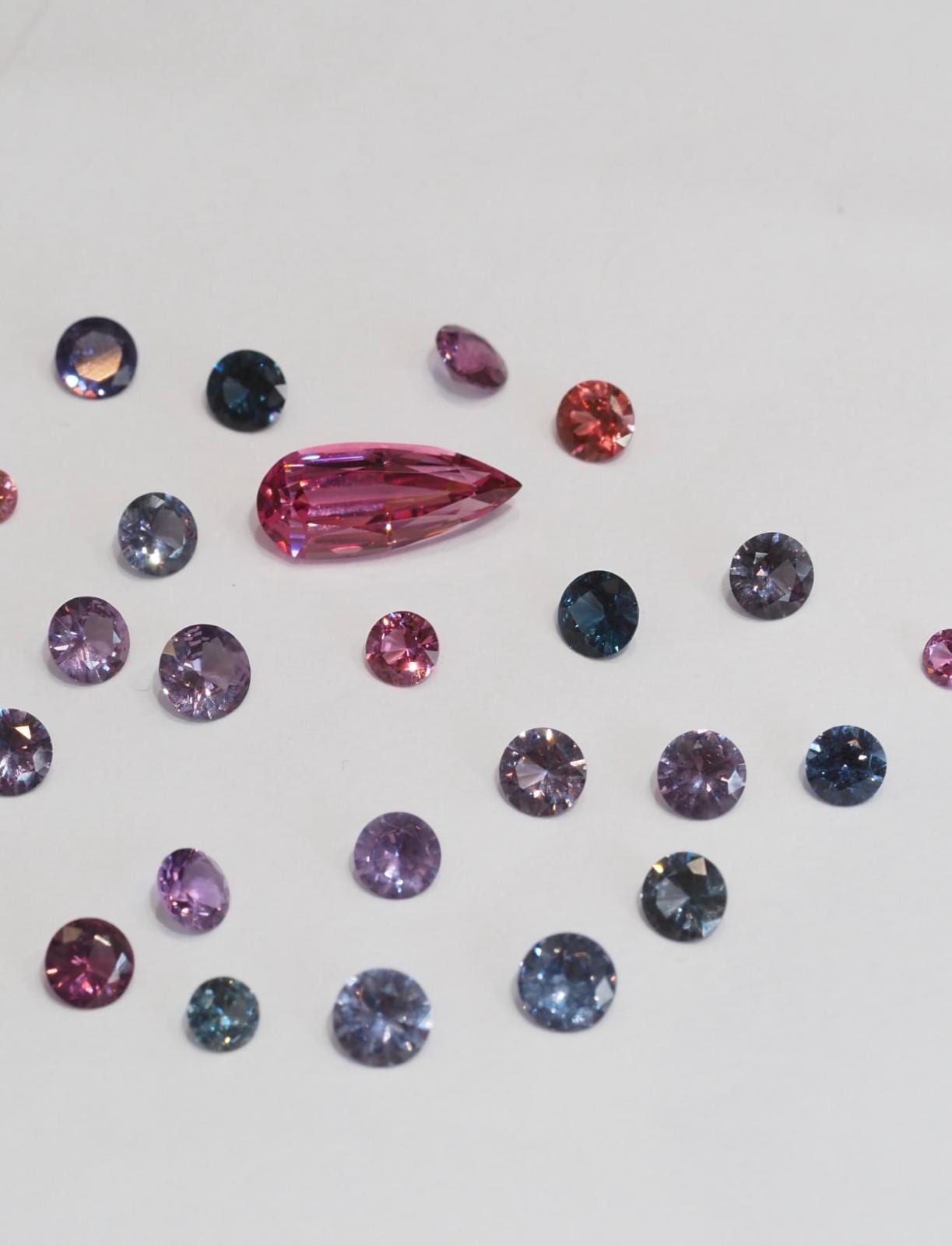
Varieties
How spinels are categorised
Trade categories rather than gemological ones — these are the terms a requirement is normally written in.
- Red Spinel
- The historic top of the species; scarce in size and clean.
- Pink Spinel
- Hot pink to pastel; the broadest availability in the species.
- Grey Spinel
- Steel and lavender-grey, in demand for contemporary design.
- Cobalt-blue Spinel
- Intense blue from cobalt. Rare, and bought with a report.
- Purple & Lavender Spinel
- Soft violets through to strong purple.
- Black Spinel
- Opaque; supplied calibrated and as beads.
Spinels in detail
Why buyers specify spinel
Three reasons come up repeatedly: the colours available in the pastel and grey range have no real equivalent in corundum, the species is hard enough for everyday wear, and most of the market is untreated. For a designer selling on natural, untreated material, spinel is one of the easier stories to tell honestly.
The grey, lavender and mauve range in particular has become a staple of contemporary bridal work, where it does something neither sapphire nor diamond does.
Availability is the constraint. Spinel does not come to market in the volumes corundum does, and calibrated production quantities are much harder to assemble. Treat a spinel requirement as a search rather than a stock pull.
Sizes and matching
Most fine spinel trades as single stones under 3 ct. Larger clean material in strong colour exists but moves quickly and prices accordingly.
Matched pairs are workable in the pastels and greys and become difficult in the strong reds and cobalt blues. Allow time, and give us a tolerance band rather than an exact target.
Treatment
The great majority of spinel on the market is untreated, and this is one of the species' commercial advantages. Heat treatment does exist for some material. Because untreated status carries value here, we do not describe an individual spinel as untreated unless that is what the accompanying documentation or the supplier's stated disclosure records.
This describes the market for the species. It is not a statement about any individual stone — disclosure for a specific stone comes from that stone’s own record and documentation. More on laboratory reports.
Buyer questions
Buying spinels
- Is spinel durable enough for an engagement ring?
- Yes, for normal daily wear with the usual care. It is a hard, tough, single-refractive stone without cleavage, and it sets more predictably than emerald or tanzanite.
- Why is cobalt spinel so much more expensive?
- Because it is genuinely rare and the colour is unlike anything else in the species. It is bought with a laboratory report confirming the cobalt colouring, and it should be, given the price gap between cobalt-blue and ordinary blue spinel.
- Can you supply calibrated spinel?
- In limited sizes and colours. Spinel does not calibrate at the scale corundum does, so tell us the quantity early — it determines whether the requirement is realistic.