Precious
Sapphires
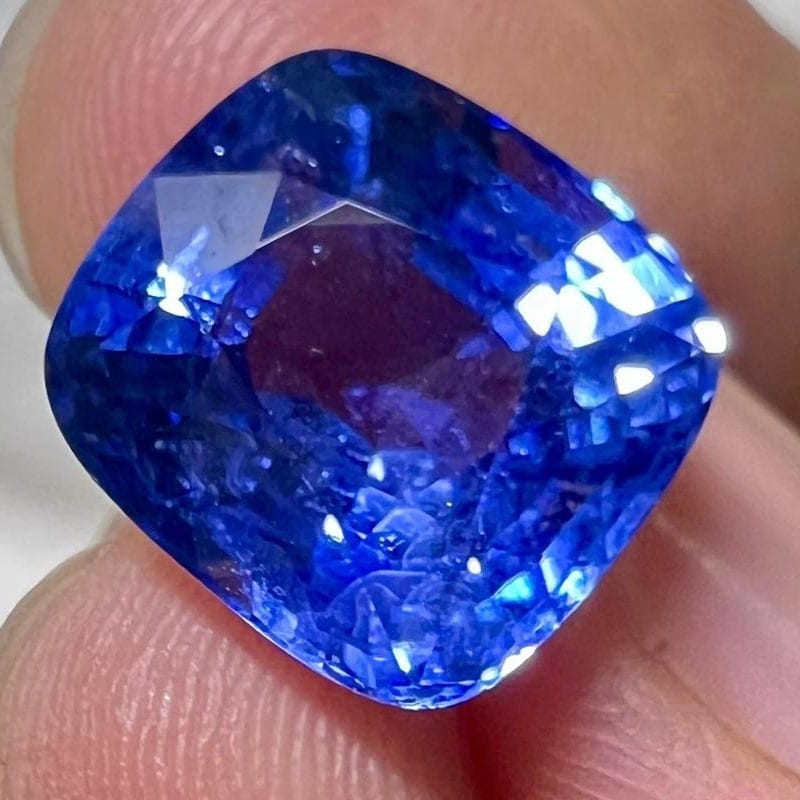
Varieties
How sapphires are categorised
Trade categories rather than gemological ones — these are the terms a requirement is normally written in.
- Blue Sapphire
- The core commercial line, from pale cornflower to deep royal.
- Teal Sapphire
- Blue-green partis, in strong demand for bespoke engagement work.
- Yellow Sapphire
- Lemon to deep golden; widely available in calibrated sizes.
- Pink Sapphire
- Light pink to hot pink; the boundary with ruby is a colour call.
- Padparadscha-type
- Pink-orange. The name itself is lab-defined and stone-specific.
- Green Sapphire
- Olive through mint, often parti-coloured.
- Purple Sapphire
- Violet to plum, frequently strongly saturated in small sizes.
- White Sapphire
- Colourless; supplied calibrated as an accent and melee stone.
- Star Sapphire
- Cabochon-cut with asterism; sold as singles.
Sapphires in detail
Colour and what buyers actually specify
Blue sapphire is bought on tone and saturation rather than on a single colour name. Requirements usually arrive as a tone band — light, medium, medium-dark, dark — plus a note on whether grey or green secondary colour is acceptable. A stone described only as "royal blue" tells a supplier very little; a tone band with a reference image tells us a great deal.
Teal and parti-coloured sapphire is now a category in its own right rather than a by-product. Buyers working in bespoke bridal generally want the colour split to be visible face-up, and will specify whether they want an even blue-green or a distinct parti banding.
In the fancy colours, availability drops sharply as size increases. Yellow is the most consistently available above 3 ct; strong pinks, oranges and colour-change material become genuinely scarce quickly, and a matched pair in those colours is a sourcing exercise rather than a stock pull.
Sizes, calibration and matching
Most manufacturing demand is for calibrated sapphire. The standard commercial steps are 1.0 mm upward in quarter-millimetre increments for small rounds, then in half-millimetre steps for ovals and cushions from about 4 × 3 mm. Specify millimetre dimensions, not carat weight, when the stone has to fit an existing setting — two 5 × 3 mm ovals can differ by 20% in weight depending on depth.
Depth tolerance is the specification most often left out and most often the cause of a rejected parcel. If your setting has a depth limit, state it. The same applies to girdle thickness on stones going into micro-pavé.
Matched pairs are matched on four axes: hue, tone, dimensions and cut quality. A pair matched on colour alone will still look wrong in a pair of earrings if the crown heights differ.
Quality considerations
Clarity expectations in sapphire are not diamond expectations. Most commercial blue sapphire is eye-clean to lightly included at arm's length; "loupe clean" in sapphire is a premium specification and should be stated explicitly if it is a requirement rather than a preference.
Cut quality varies more in coloured stones than in diamond, and it is where value is most often lost. Windowing — a pale, washed-out area through the centre where the pavilion is too shallow — is the single most common defect in commercial goods. Extinction, the dark areas in a stone cut too deep, is the opposite failure.
For production work, consistency across a parcel matters more than the quality of the best stone in it. When you send a requirement, tell us whether you are buying to a floor (nothing below this standard) or to an average.
Treatment
Heat treatment is routine and long-established in sapphire, and the large majority of commercial material on the market is heated. Unheated stones trade at a substantial premium and are normally sold with a laboratory report confirming no evidence of heating. Other treatments exist in the market, including lattice diffusion and fracture filling, and are separate categories that must be disclosed as such. We state the treatment recorded for each stone we offer, and where a stone is represented as unheated we supply the report that says so.
This describes the market for the species. It is not a statement about any individual stone — disclosure for a specific stone comes from that stone’s own record and documentation. More on laboratory reports.
Buyer questions
Buying sapphires
- Can you supply sapphire in calibrated sizes for a production run?
- Yes — calibrated supply is one of the main things we are asked for. Send the millimetre dimensions, shape, quantity, colour band and any depth limit, and tell us whether the run repeats. Repeat programmes are quoted differently from a one-off quantity because the matching requirement carries across deliveries.
- What is the difference between heated and unheated sapphire in practice?
- Commercially, price and documentation. Heated sapphire is the market standard and is available across sizes and colours. Unheated material is a smaller pool, costs materially more, and is normally bought with a laboratory report. If your customer is being told a stone is unheated, buy it with the report.
- Do you supply matched pairs?
- Yes. Give us the shape, millimetre dimensions, colour band and tolerance you can accept on each. Pairs in the fancier colours and in larger sizes take longer to assemble than pairs of commercial blue.
- Is teal sapphire a distinct variety or a trade name?
- It is a trade description for blue-green sapphire rather than a separate gemological category. That means the term is used loosely across the market, so it is worth sending a reference image with any teal requirement.