Trade supply
For Jewellery Manufacturers
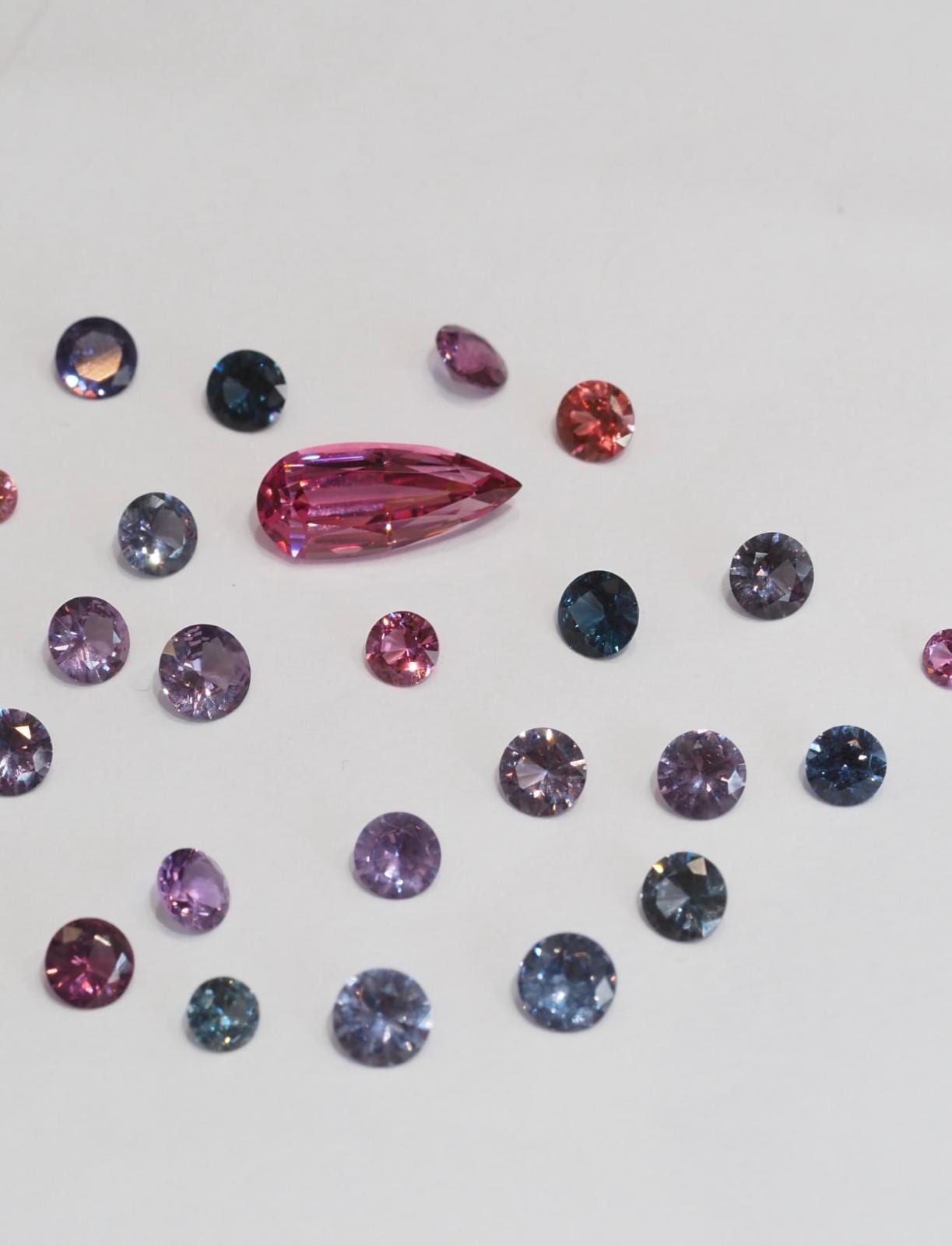
For Jewellery Manufacturers — detail
Consistency beats the best stone in the parcel
For production, the stone that matters is the worst one in the lot, not the best. A parcel with two exceptional stones and a long tail below your standard will slow the bench down and generate rejects.
Specify to a floor rather than an average, and say so explicitly. It is a different instruction and it produces a different selection.
The specifications that protect a production run
Three fields prevent most of the problems that reach a bench:
- Maximum depth — the most commonly omitted field and the commonest cause of a rejected parcel
- Girdle thickness and consistency, where stones go into pavé or channel settings
- Outline symmetry tolerance, where settings are machine-made
Repeat programmes
A repeating order is a commitment to match across deliveries. The practical mechanism is a retained physical reference from the first run — descriptions drift, stones do not.
Tell us the cadence at the outset. A quarterly programme is quoted and selected differently from a single order of the same size.
Setting risk by species
Not every stone tolerates every setting method. Emerald, tanzanite and peridot need care under pressure and heat; corundum, spinel and garnet are far more forgiving.
If a design requires tension setting, channel setting or heat at the bench, say so with the requirement. It narrows what we will offer, which is the point.
Buyer questions
For Jewellery Manufacturers
- Can you supply the same specification every quarter?
- Yes, and that is the right way to run it. Keep reference stones from the first delivery and we will match subsequent runs against them rather than against a written description.
- Which species are safest for channel setting?
- Corundum, spinel and the garnets tolerate pressure well. Emerald, tanzanite and peridot need more care. Tell us the setting method and we will factor it in.
Get in Touch
Tell us the stone.We’ll source to the specification.
Send the species, colour, shape, size, treatment and quantity — as much of the specification as you have.